
The International Cricket Council (ICC) concluded its Annual Meetings, establishing a new Governance Review Committee headed by BCCI secretary Devajit Saikia.

The Indian economy is growing at a robust pace, driven by strong domestic demand, low inflation, and the healthy balance sheets of banks, said a Reserve Bank report released on Wednesday.
The Reserve Bank on Monday said asset quality of banks improved further and their gross non-performing assets (GNPA) or bad loans ratio declined to a 12-year low of 2.6 per cent in September 2024 on the back of falling slippages and steady credit demand. The RBI also flagged concern over a sharp rise in write-offs, especially among private sector banks (PVBs), which could be partly masking worsening asset quality in unsecured lending segment and dilution in underwriting standards.

The bad assets or gross NPAs of commercial banks fell to a 12-year low of 2.8 per cent in March 2024 and may go down further to 2.5 per cent by the end of the current fiscal, said the RBI's Financial Stability Report (FSR) released on Thursday. Scheduled Commercial Banks' (SCBs) gross non-performing assets (GNPA) ratio fell to 2.8 per cent, and the net non-performing assets (NNPA) ratio to 0.6 per cent at the end of March 2024. "The asset quality of SCBs recorded sustained improvement, and their GNPA ratio moderated to a 12-year low in March 2024. Their NNPA ratio too improved to a record low," said the June FSR.

Indian regulators have identified certain groups as 'financial conglomerates' and they are being monitored closely for any systemic risks they may pose.

The government and financial sector regulators buried their differences on the proposed Financial Stability & Development Council (FSDC) after Finance Minister Pranab Mukherjee offered the Reserve Bank of India governor a sweetener.

Fraud in Citibank's Gurgaon branch broke out in December involving nearly Rs. 400 crore being siphoned out from 20 accounts of high net-worth individuals.
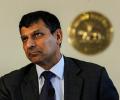
RBI Governor cautioned against more volatility.

Gold and silver imports during April, 2013 jumped by 138 per cent to $7.5 billion against $3.1 billion in the year-ago period.

The average time lag between the date of occurrence of a fraud and its detection is 23 months; for large frauds (Rs 100 crore and above), it was 57 months.

The 21st meeting of FSDC comes against the backdrop of the economy hitting a six-year low growth rate of 5 per cent in the first quarter of 2019-20. Even some of the macroeconomic data for the second quarter does not portray an encouraging picture of the economy.

Rajan will be closely working with the RBI governor and the four deputy governors to gain familiarity with the central bank's stance on various issues.

Sebi's stewardship code for mutual funds and alternative investment funds lays down six principles to improve corporate governance standards in their investee companies, reports Jash Kriplani.
Managing expectations is a challenge for policymakers.

Thanks to the recapitalisation by the government and measures taken by the central bank, collapse of any large housing finance company won't pose as big a risk as it had six months ago.
'The PCA framework was revised and tightened in April 2017, but there was no discussion in any board meeting. The government does not know the rationale behind revising the framework and how the RBI arrived at it. Similarly, there was no discussion in the board meeting on the revised NPA framework,' said an official.
